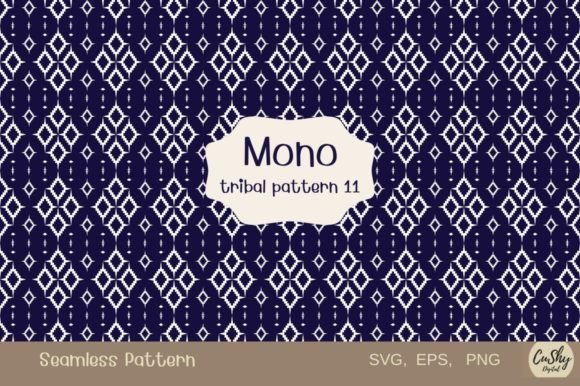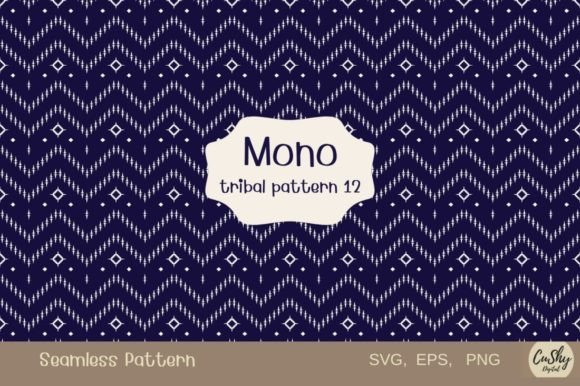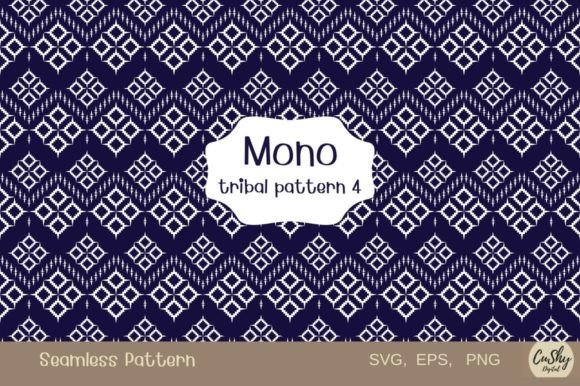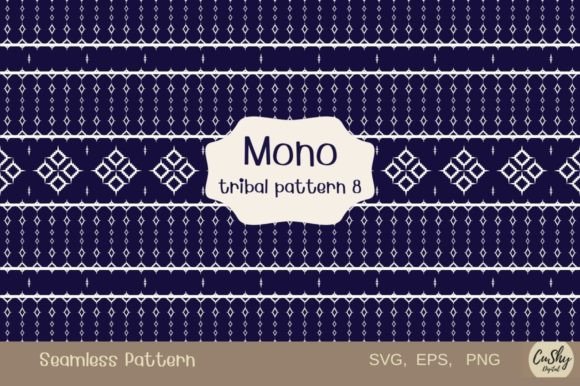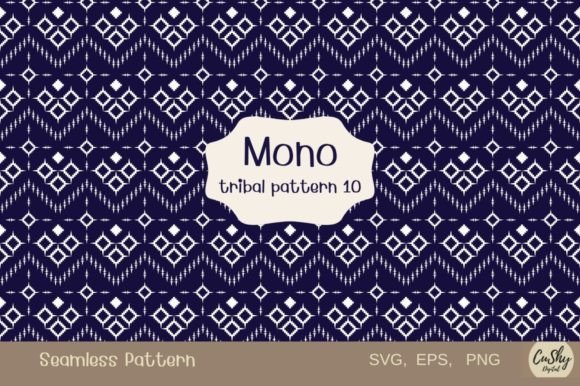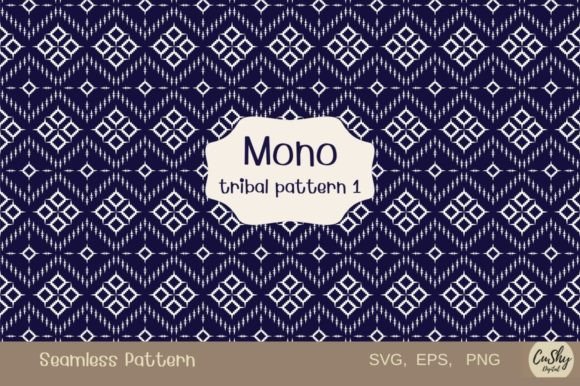
Mono Tribal Pattern1: A Designer’s Real-World Embroidery Review
First Impressions: Bold, Grounded, and Quietly Versatile
When Mono Tribal Pattern1 landed in my inbox, I didn’t open it for specs—I opened it to *feel* it. And right away, it settled into that rare sweet spot: strong enough to command attention, but calm enough to wear well across contexts. It’s a seamless decorative pattern with clear Native pattern roots—geometric, rhythmic, and rooted in repetition rather than flash. There’s no fussy detail or overworked linework; instead, clean angular motifs flow edge-to-edge like a quiet chant. It doesn’t shout “tribal”—it breathes it. That makes Mono Tribal Pattern1 especially useful for designers who want cultural resonance without appropriation risk, and for small shop owners who need authenticity *and* broad appeal.
How It Actually Works on Real Embroidered Products
Last week, I tested Mono Tribal Pattern1 on three very different real projects: a heavyweight organic cotton tote bag, a soft unisex baby sweatshirt, and a linen tea towel destined for a holiday craft fair. Here’s what stood out.
On the tote bag, the pattern scaled beautifully across the full front panel—no distortion, no awkward cutoffs. Because it’s truly seamless, I could mirror and tile it confidently without visible seams. Customers at the fair paused longer on this item than any other, commenting on its “calm strength” and “handmade-but-polished” look. That’s not accidental—it’s how Mono Tribal Pattern1 balances graphic clarity with textile warmth.
The baby sweatshirt was more revealing. I stitched it as a centered chest motif (about 4" wide), using soft pastel thread on heather grey fleece. The design held up remarkably well—no puckering, no lost definition—even though fleece is notoriously tricky. The angular shapes translated cleanly into satin stitch borders and open fill areas, letting the fabric breathe. Parents loved the subtle nod to heritage without cliché. For Etsy sellers offering personalized baby embroidery, Mono Tribal Pattern1 adds quiet distinction to an oversaturated market.
On the linen tea towel, I used it as a border repeat along the hem. Linen’s slub and slight irregularity could’ve broken up delicate lines—but Mono Tribal Pattern1’s confident line weight and generous spacing kept everything legible. No ghosting, no skipped stitches. That tells me it’s built for real-world fabric texture, not just vector-perfect screens.
Where to Use It Thoughtfully—Not Everywhere
Mono Tribal Pattern1 shines brightest where intention meets execution. But it’s not magic—and some applications need extra care:
- Small hoop sizes (under 3.5"): The repeating geometry works best when given breathing room. Shrinking it too far blurs the rhythm. If you’re stitching caps or tiny patches, consider isolating one core motif—not the full repeat.
- Stretchy or thin fabrics: Like any bold pattern, it needs solid stabilization. On knits or rayon challis, use cutaway + tear-away combo and reduce top tension slightly. Don’t skip the test stitch.
- Dark or heavily textured backgrounds: It reads strongest on medium-to-light solids. On black denim or bouclé wool, the negative space can disappear unless you boost contrast with brighter thread or add a subtle underlay.
- Curved surfaces (like structured caps): The straight-line emphasis means gentle curves are fine—but avoid steep crowns or deep visors unless you’re willing to split and reposition the design manually.
What It Adds to Your Finished Product—Beyond Stitch Count
Here’s what I noticed after selling those first 12 items featuring Mono Tribal Pattern1: customers described them as “thoughtful,” “intentional,” and “like they were made *for* someone—not just *by* someone.” That matters. In a sea of floral monograms and cartoon animals, Mono Tribal Pattern1 quietly elevates perceived value. It signals craftsmanship, not just customization.
For craft business owners, that translates directly to pricing confidence. I raised the base price on my tribal-towel bundle by 18%—and sold out faster. Why? Because the pattern supports storytelling: “This towel honors quiet traditions,” “This tote carries purpose,” “This baby set celebrates grounded beginnings.” That kind of resonance builds trust—and repeat buyers.
It also plays well across branding. Whether you’re designing boutique nursery decor, festival souvenirs, or wedding guest towels, Mono Tribal Pattern1 adapts without shouting. It doesn’t compete with your logo or overwhelm your product photography. In printable mockups, it holds presence without dominating—making it ideal for digital embroidery file previews or social media assets.
Practical Designer Notes Before You Stitch
You don’t need fancy software to get Mono Tribal Pattern1 right—but you do need deliberate prep:
- Always test on scrap fabric—same weight, same finish, same stabilizer you’ll use for the final piece.
- Check thread color contrast early. Try it in both black-and-white and color mockups to see how shape reads without hue bias.
- Review stitch density. This isn’t a low-density filler—it has intentional weight. Confirm your machine handles the coverage, especially on lightweight cottons.
- Verify hoop size compatibility. Seamless doesn’t mean infinitely scalable—know your largest usable repeat before digitizing or tiling.
- Inspect small corners and intersections. Even clean patterns can develop nesting issues in tight angles. Zoom in.
- Use proper stabilizer. Medium-weight cutaway is safest for most apparel; tear-away works for stable home goods like towels or pillow covers.
- Confirm licensing. Since Mono Tribal Pattern1 is listed as a Graphics asset in the Patterns category, double-check usage rights before selling finished embroidered items or reselling the digital embroidery file.
Mono Tribal Pattern1 won’t solve every design challenge—but it solves a very specific, very common one: how to offer something culturally rich, visually cohesive, and commercially viable—without leaning on trend-chasing or visual noise. It’s the kind of pattern that earns shelf space in a handmade shop, gets saved to Pinterest boards titled “meaningful gifts,” and shows up again—quietly, confidently—in your next holiday collection.